Launch offer — valid today only

📄 Digital book in PDF · read it on your phone or print it

Tree Rigging in Drawings: Know the Load Before You Make the Cut One Rigging Topic per Page

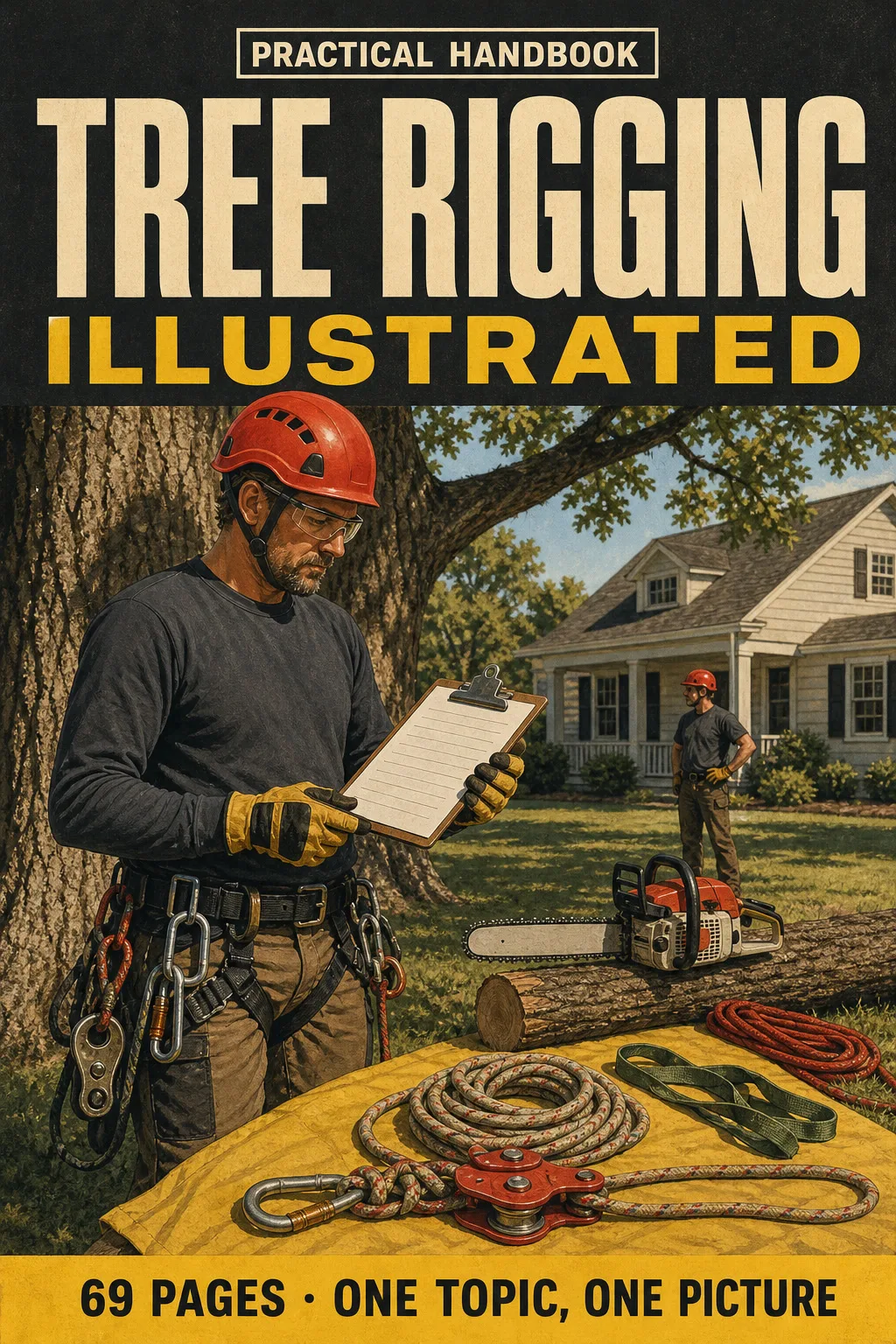
Piece weight, block loads, working load limits, friction wraps, tip-ties, negative rigging, drop zones and crew commands. Every topic gets its own page: the drawing first, then what you need to remember. 69 illustrated pages.

GET THE BOOK + 2 BONUS BOOKS

🔒 Secure checkout · PDF by email · 30-day guarantee

Every topic, its own pageEvery force drawn as arrows in pounds, with the explanation right beside it
69 illustrated pages69 illustrated pages in 9 parts, from the first lowering plan to the final checklist
Up-to-date sourcesChecked against ANSI Z133, the OSHA rules that apply to tree work and manufacturer spec sheets
PDF by emailFormat

Look Inside the Book

Every page has one big drawing and a box with the numbers and steps you need to know:

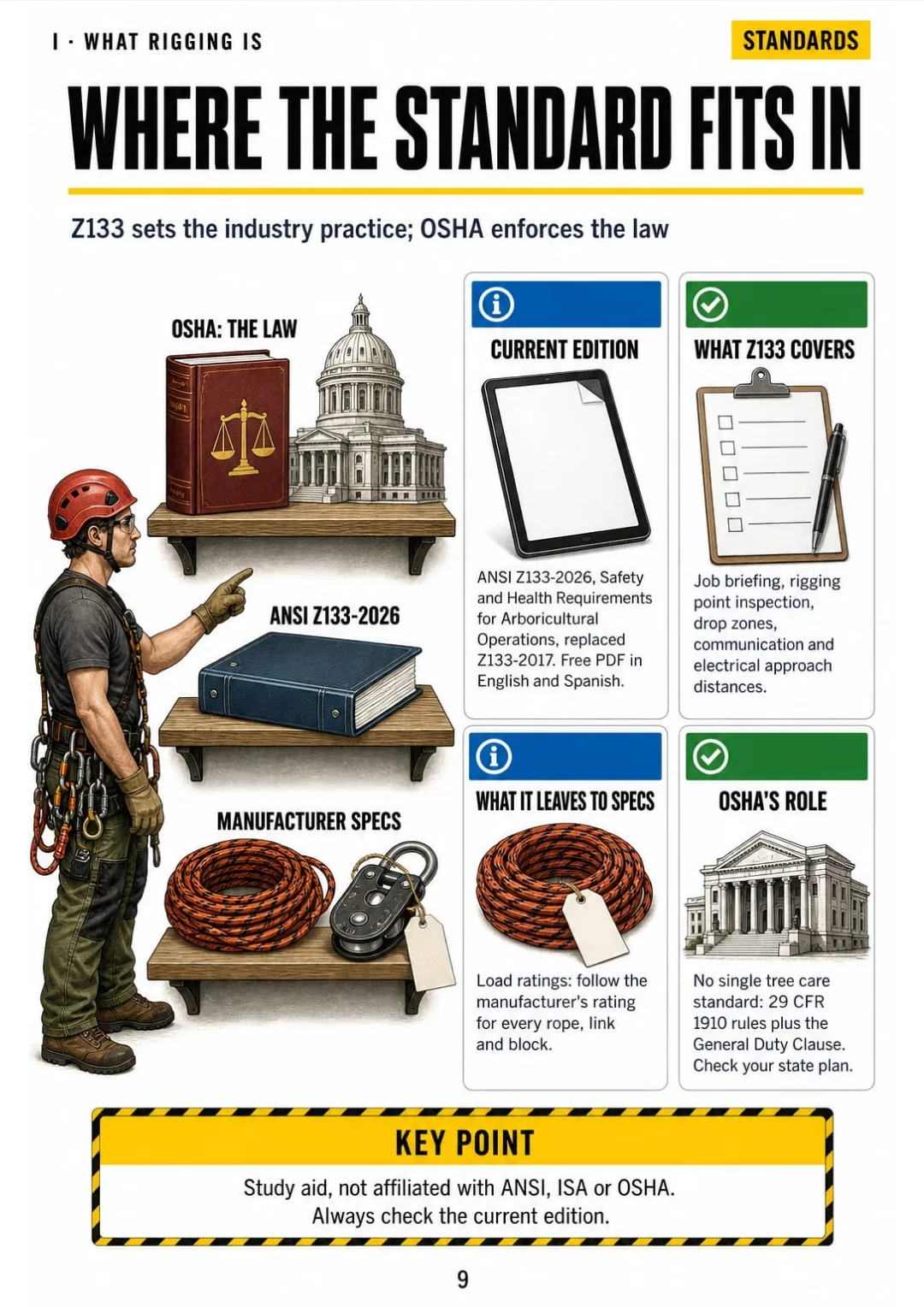
What ANSI Z133-2026 covers for rigging, what OSHA enforces, and what the manufacturer specs decide.
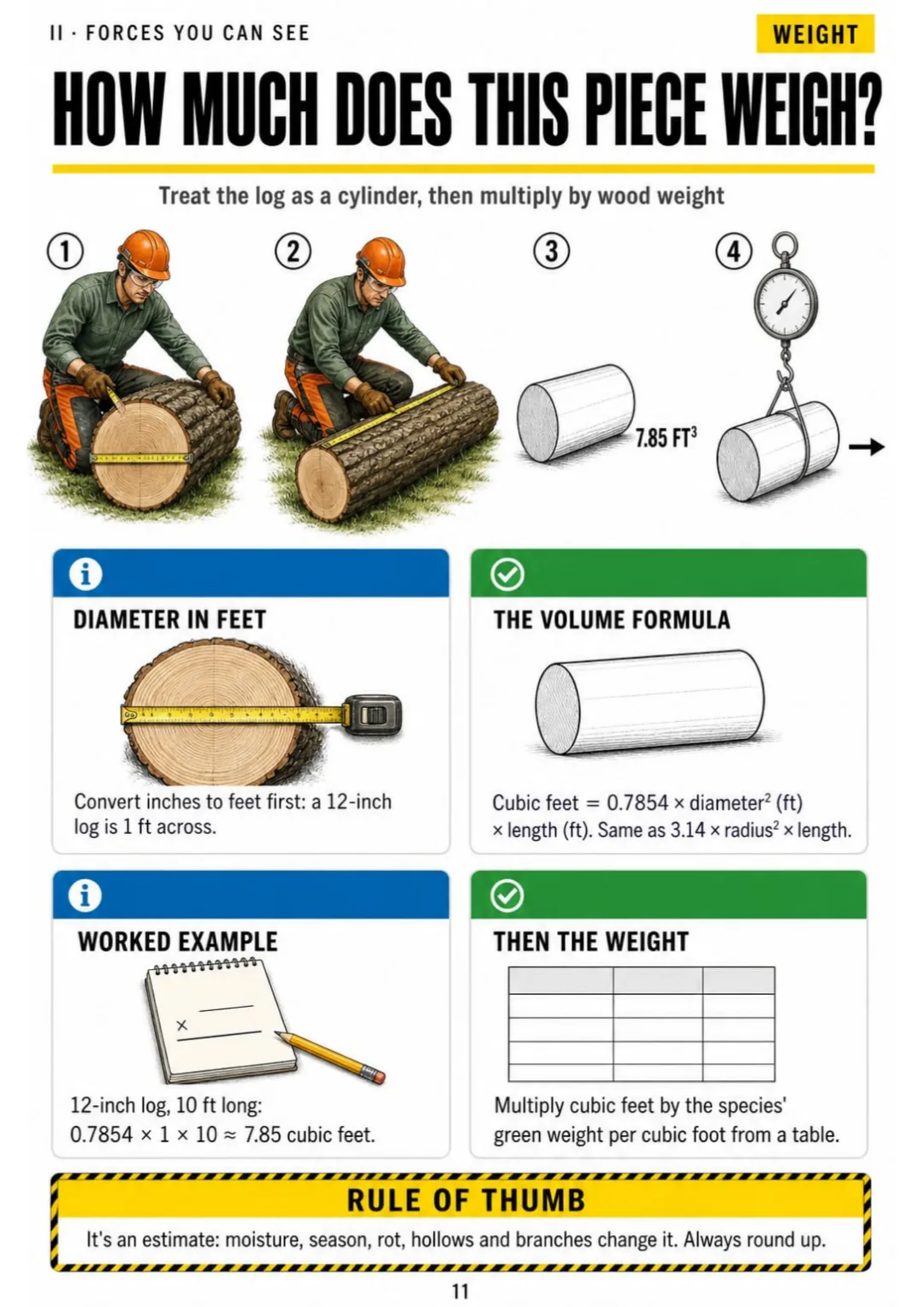
12-inch × 10-ft log ≈ 7.85 cubic feet: 0.7854 × diameter² × length
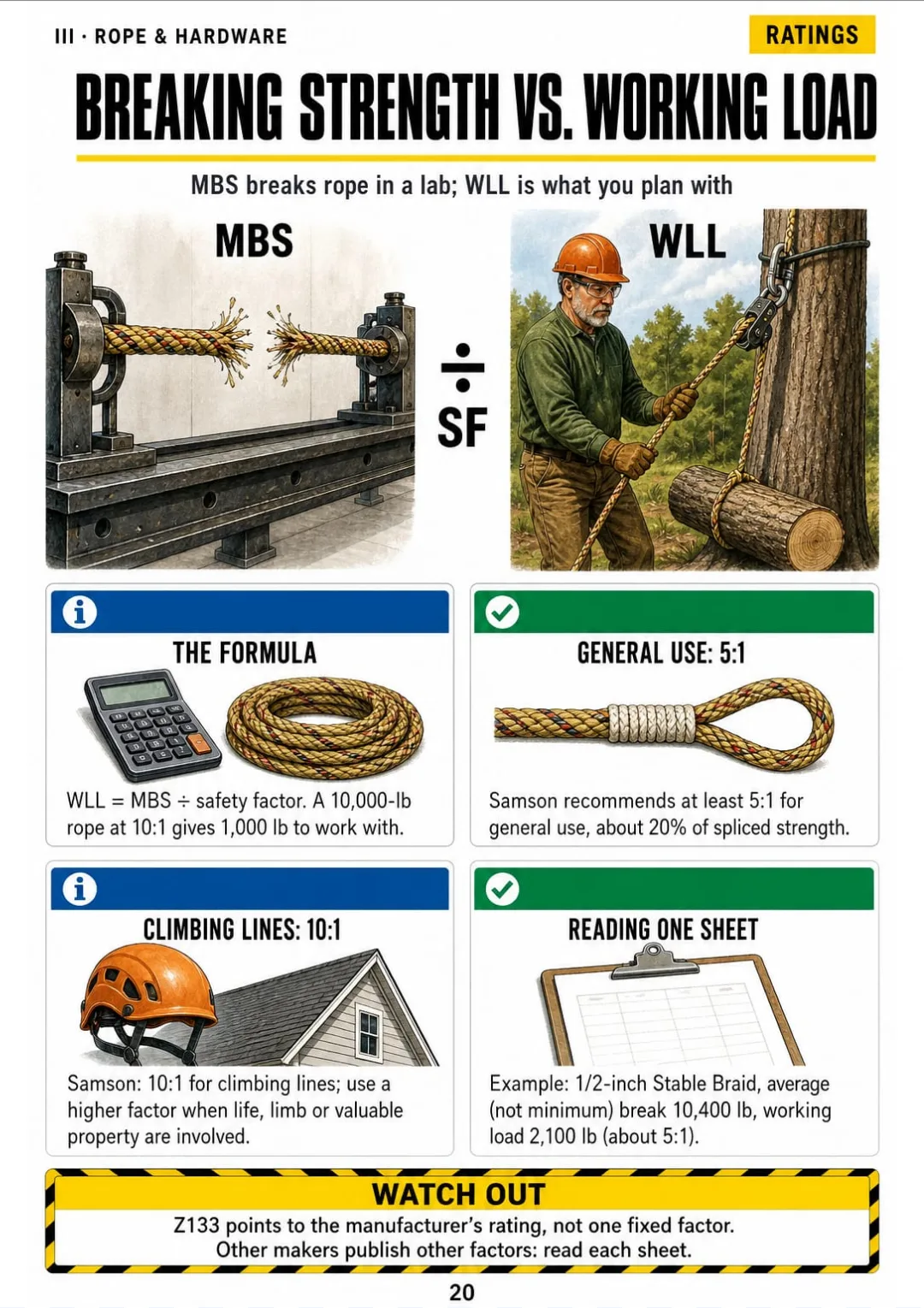
WLL = MBS ÷ safety factor: 10,000 lb at 10:1 leaves 1,000 lb to work with.
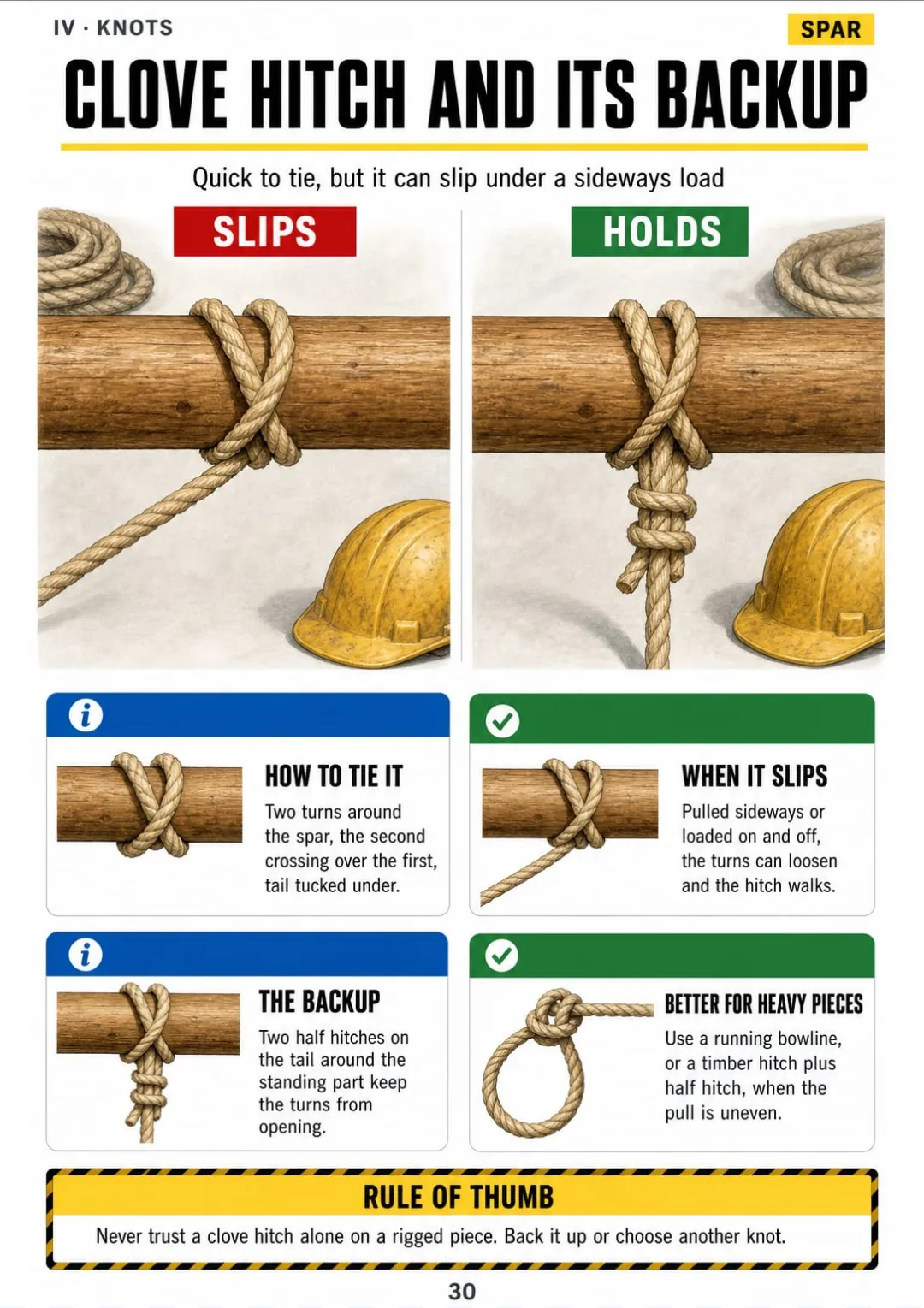
Clove hitch alone vs. backed up with two half hitches, side by side.
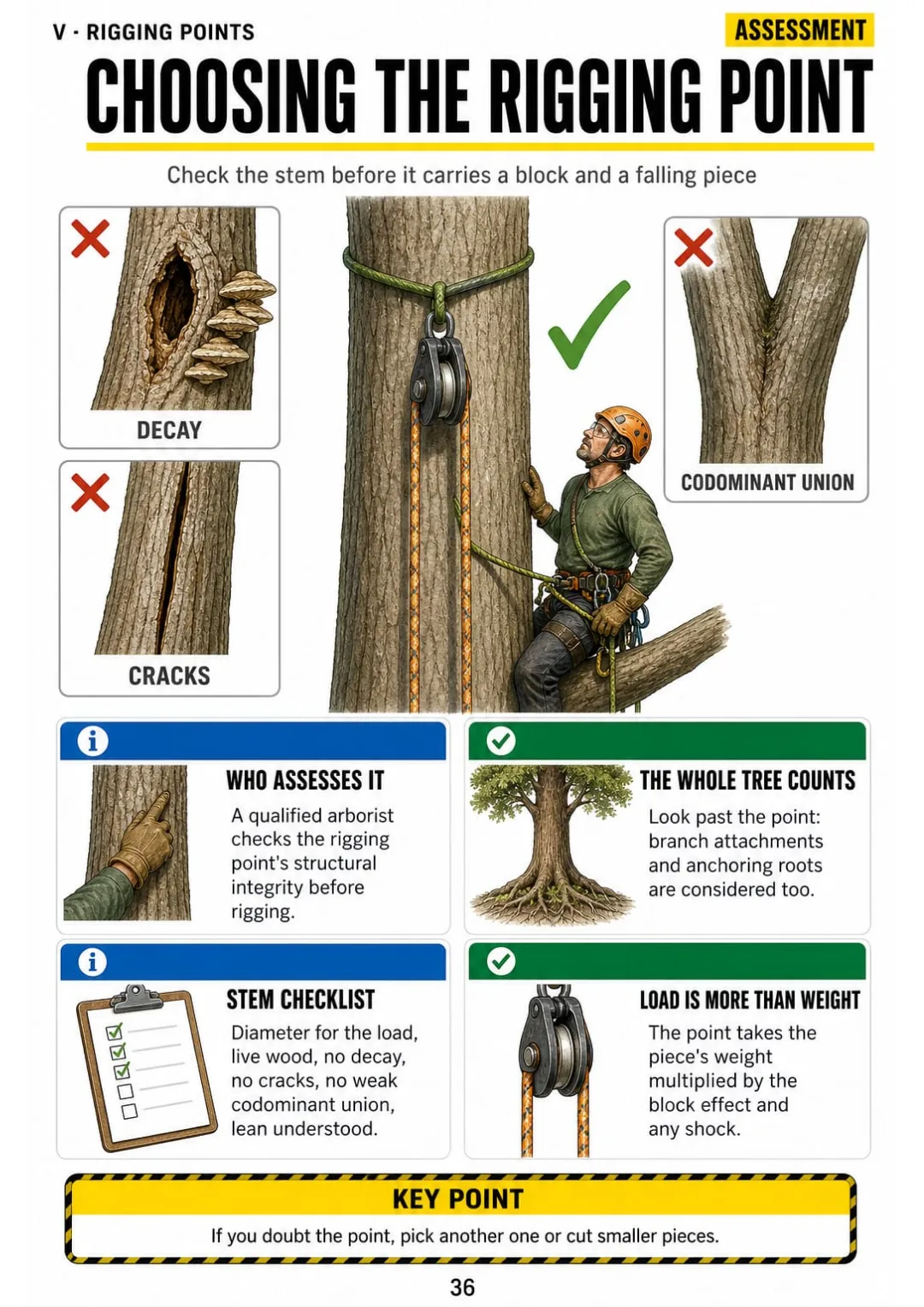
Decay, cracks, included bark: three red flags before you hang a block.
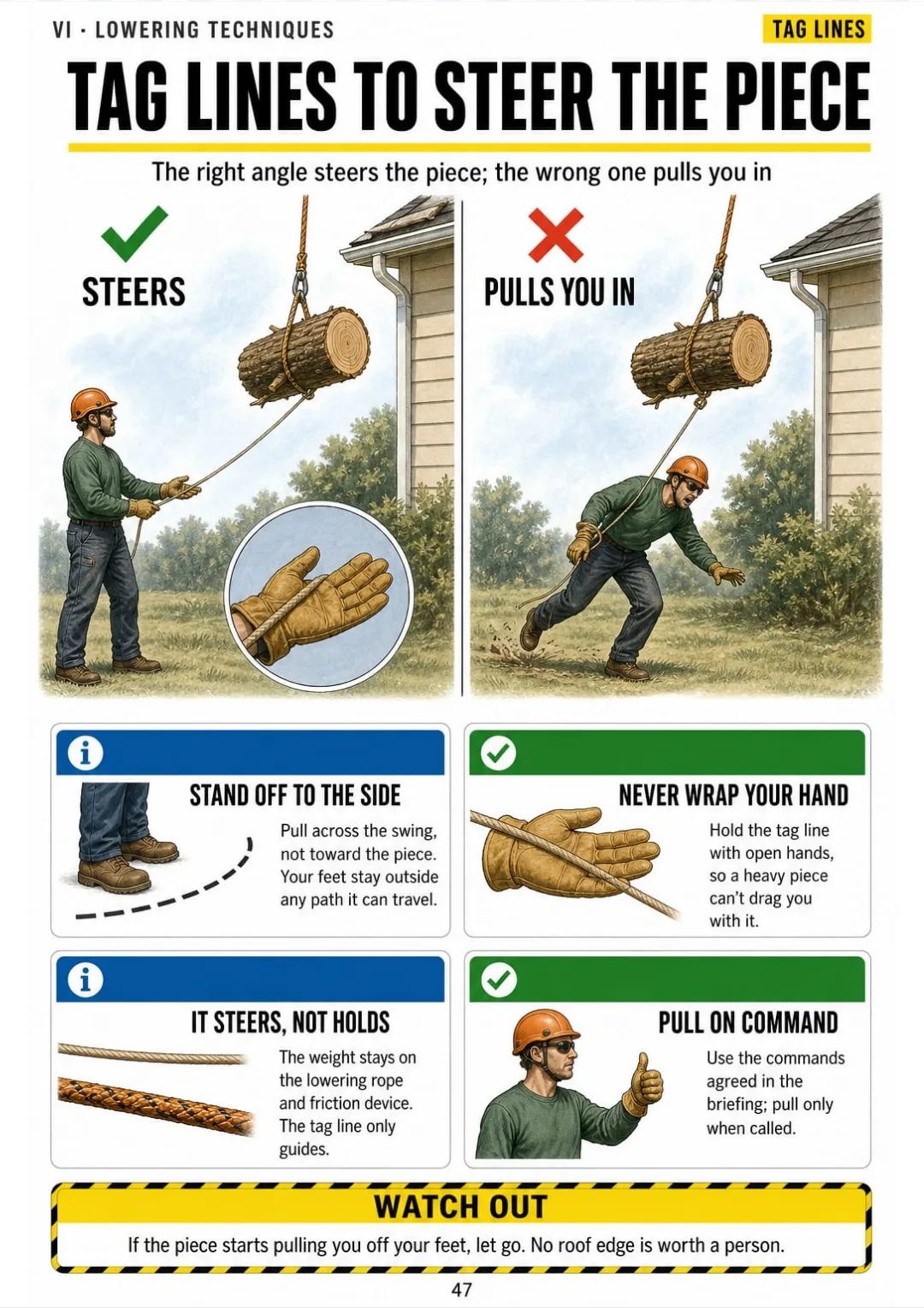
Tag lines: pull across the swing from the side, hands never wrapped.
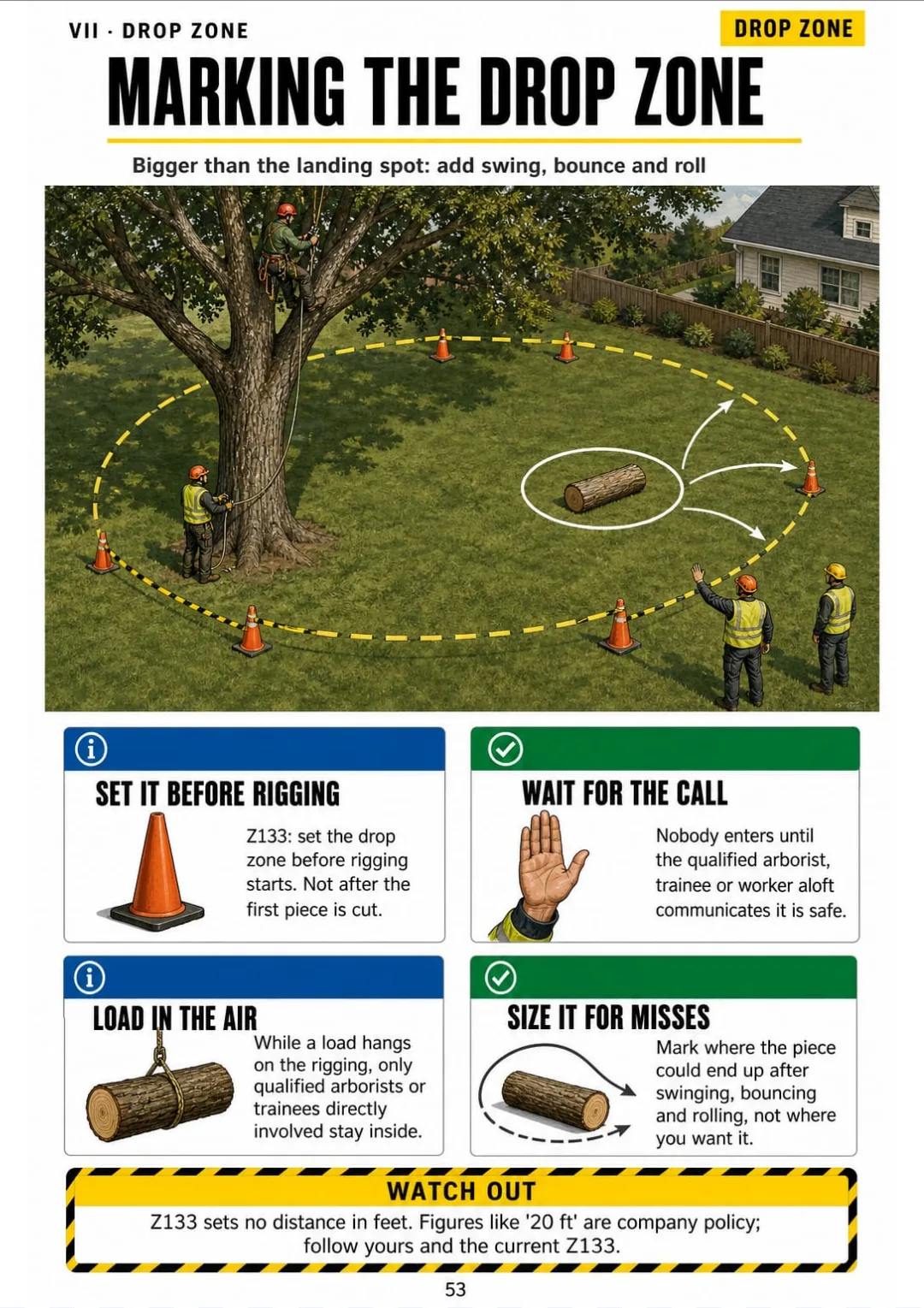
Drop zone set before rigging starts; nobody enters until the climber calls it safe.
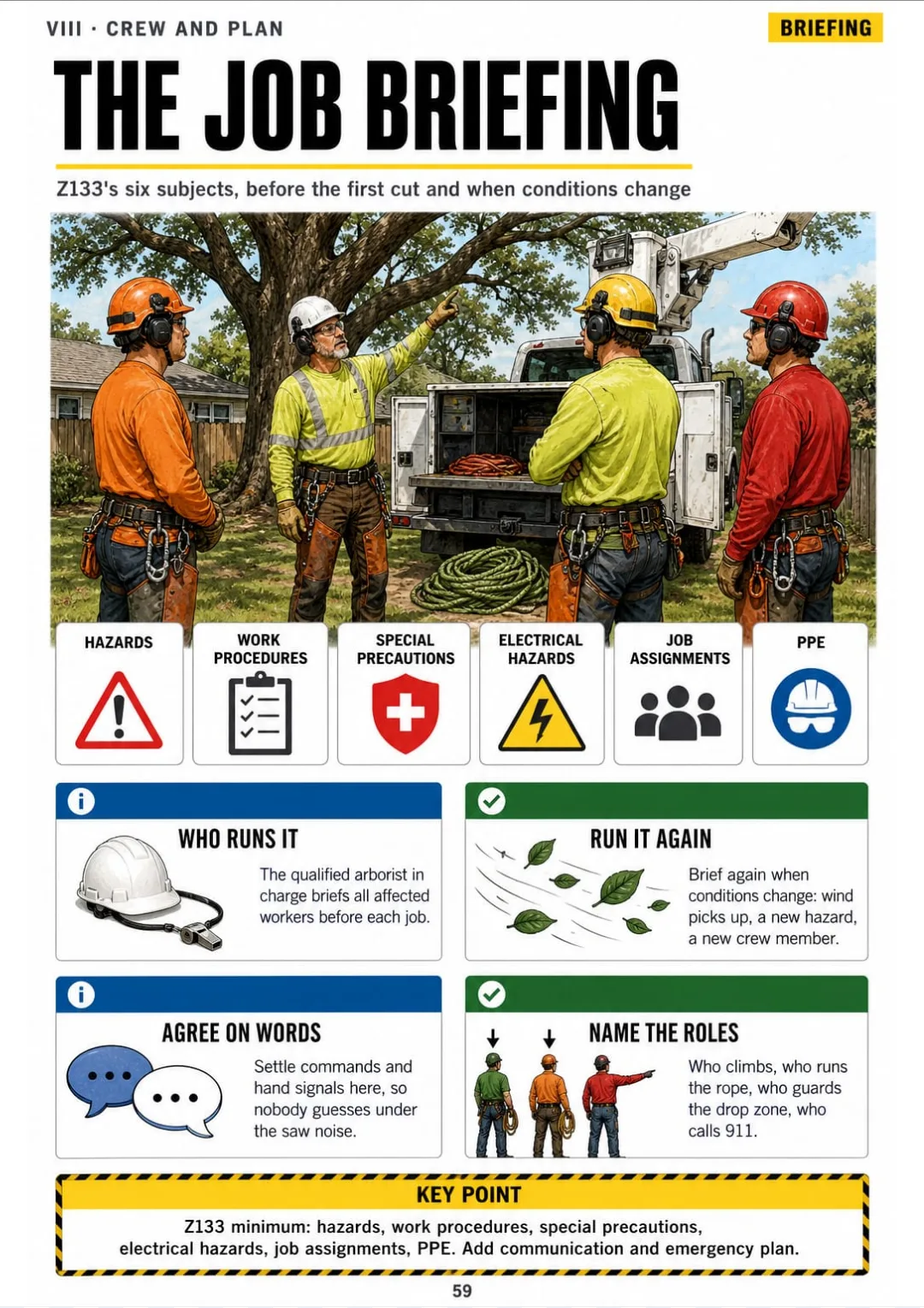
Hazards, procedures, precautions, electrical, assignments, PPE: the Z133 briefing before every rigging job

Swipe to see more →

These are real pages from the book. The table of contents is the full one: 9 parts and 65 topics.

The Problem Isn't You. It's How It Was Explained to You.

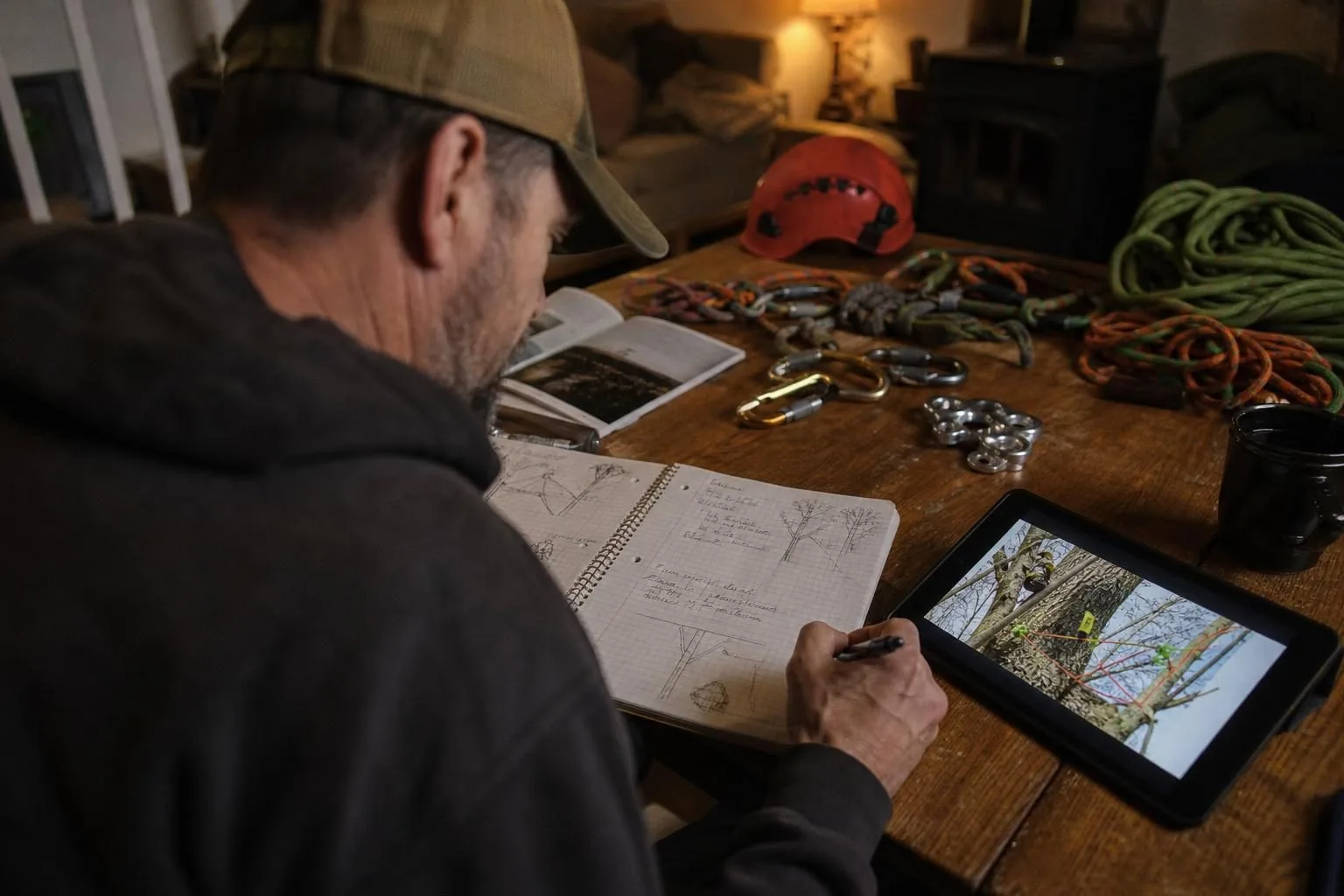
You're at the truck before a removal over a garage, holding a rope bag. The tag shows the breaking strength, and you need to know how much you can actually hang on it.

The spec sheet and the manual explain it in paragraphs: breaking strength, working load limit, design factor, knot efficiency, all packed into one block of text. On the job, nobody stops to decode a paragraph.

WLL = MBS ÷ safety factor: 10,000 lb at 10:1 leaves 1,000 lb to work with.

In this book it's one page. The rope is drawn with two bars: the full breaking strength and the slice you actually work with. WLL = MBS ÷ design factor: 10,000 lb at 10:1 leaves 1,000 lb.

Same with piece weight, why the block carries double, how many wraps on the friction device, the tip-tie and the drop zone: each one has its own page.

You read the tag, do the division and pick the rope without going back to the manual. And you can show the new groundie the same page.

COMPARE FOR YOURSELF

The Same Topic, Two Ways to Learn It

THIS
  • The manual: line after line
  • Log weight explained only in words
  • You show up on the job still guessing
To estimate the weight of a section prior to rigging, the volume of the cylindrical segment must first be determined by multiplying the cross-sectional area, calculated as 0.7854 times the square of the diameter, by the length of the section, with all dimensions converted to consistent units of feet. The resulting volume in cubic feet is subsequently multiplied by the green weight per cubic foot of the species concerned, a value which varies considerably according to moisture content, season and the proportion of heartwood present in the stem.
FOR THIS
  • The log and its volume in one drawing
  • The formula and the numbers in a box
  • You see it and you get it
12-inch × 10-ft log ≈ 7.85 cubic feet: 0.7854 × diameter² × length
CONTENTS

Take a Look at the 9 Parts and 65 Topics

What rigging really is, forces, rope and hardware, knots, rigging points and friction, lowering techniques, the drop zone, the crew and the final checklists: 69 pages, all illustrated.

IWhat Rigging Really Is · pp. 5-10
  1. Rigging Is Controlling Energy, Not Tying Ropes
  2. The Five-Step Lowering Plan
  3. Words of the Trade, Drawn
  4. Natural Rigging vs. Block Rigging
  5. Where the Standard Fits In
  6. Who Does What on a Rigging Job
IIForces You Can See · pp. 11-19
  1. How Much Does This Piece Weigh?
  2. Green Wood Weight by Species
  3. Static Load vs. Dynamic Load
  4. Why Drop Distance Multiplies the Load
  5. Why the Block Carries Double
  6. The Angle Changes the Block Load
  7. Letting It Run Lowers the Peak
  8. Rope Stretch: Helper or Problem
  9. Swing: The Pendulum You Forget
IIIRope, Slings and Hardware · pp. 20-27
  1. Minimum Breaking Strength vs. Working Load
  2. What Lowers Rope Strength
  3. Rigging Rope Constructions
  4. Choosing the Rope Diameter
  5. Slings: Loopies, Whoopies and Round Slings
  6. Sling Angle and Hitch Type
  7. Blocks and Pulleys
  8. The Weakest Link Rule
IVKnots and Hitches for Rigging · pp. 28-35
  1. Running Bowline: Tying Off a Limb
  2. Timber Hitch Plus Half Hitches
  3. Clove Hitch and Its Backup
  4. Cow Hitch on a Block or Ring
  5. Bowline on a Bight and Other Loops
  6. Marlinspike Hitch for Lifting a Log
  7. Dressing and Setting a Knot
  8. Tails and Backup Knots
VRigging Points and Friction · pp. 36-43
  1. Choosing the Rigging Point
  2. Rigging Point Height and Position
  3. Natural Crotch vs. False Crotch
  4. Redirects and Spreading the Load
  5. Friction Devices at the Base
  6. How Many Wraps?
  7. Wrapping the Trunk at the Base
  8. Heat, Glazing and Rope Damage
VILowering Techniques · pp. 44-52
  1. Tip-Tie: Lowering a Limb Flat
  2. Butt-Tie: Tying Near the Cut
  3. Tip-and-Butt with Two Ropes
  4. Tag Lines to Steer the Piece
  5. Notch and Hinge for Rigged Pieces
  6. Spar Removal: Top-Down Pieces
  7. Negative Rigging in Cross-Section
  8. Speedlines
  9. When to Cut Smaller
VIIDrop Zone, Houses and Wires · pp. 53-58
  1. Marking the Drop Zone
  2. Targets: House, Fence, Lines, Cars
  3. Power Lines: Approach Distance
  4. Pieces Over a Roof
  5. Ground and Landing Area
  6. Spotting Hazards Before You Climb
VIIICrew, Commands and the Plan · pp. 59-64
  1. The Job Briefing
  2. Voice Commands, Call and Response
  3. Hand Signals When You Can't Hear
  4. The Rope Runner's Job
  5. Teaching a New Groundie
  6. Emergency Plan and Aerial Rescue
IXReview and Checklists · pp. 65-69
  1. Pre-Lowering Checklist
  2. Load Math on One Page
  3. Rope and Gear Retirement Signs
  4. Most Common Rigging Mistakes
  5. The Whole Plan at a Glance

One Page, One Topic, All Clear

Think of it this way:

You're forty feet up a big live oak that hangs over a roof. The next piece is a heavy limb, and you have to decide where to tie it and how it will swing.

You open the tip-tie page and it's drawn: rope near the end, the tip staying up, the butt dropping, and an arrow showing the block taking up to about twice the rope force, depending on the angle.

Decay, cracks, included bark: three red flags before you hang a block.

Same with the butt-tie, natural vs. false crotch, how many wraps, negative rigging on a spar and approach distance to power lines: each one on its own page.

Tree Rigging Illustrated is 9 parts and 69 illustrated pages, with a pre-lowering checklist and the load math on one page at the end.

What you see drawn, you don't have to memorize.

What's Inside Tree Rigging Illustrated:

Ipp. 5-10

What Rigging Really Is

Rigging as energy control, the five-step lowering plan, trade words drawn, natural vs. block rigging, where the standard fits in and who does what.

IIpp. 11-19

Forces You Can See

Piece weight and green wood by species, static vs. dynamic load, drop distance, why the block carries double, block angle, letting it run, rope stretch and swing.

IIIpp. 20-27

Rope, Slings and Hardware

Breaking strength vs. working load, what weakens rope, rope constructions, diameter, loopies, whoopies and round slings, sling angles, blocks and the weakest link.

IVpp. 28-35

Knots and Hitches for Rigging

Running bowline, timber hitch with half hitches, clove hitch and its backup, cow hitch, loops, marlinspike hitch, dressing and setting, tails and backups.

Vpp. 36-43

Rigging Points and Friction

Choosing and placing the rigging point, natural vs. false crotch, redirects, friction devices at the base, how many wraps, trunk wraps and rope heat.

VIpp. 44-52

Lowering Techniques

Tip-tie, butt-tie, tip-and-butt with two ropes, tag lines, notch and hinge, spar removal, negative rigging in cross-section, speedlines and when to cut smaller.

VIIpp. 53-58

Drop Zone, Houses and Wires

Marking the drop zone, targets like houses, fences, lines and cars, approach distance to power lines, pieces over a roof, the landing area and hazards to spot first.

VIIIpp. 59-64

Crew, Commands and the Plan

The job briefing, call-and-response commands, hand signals, the rope runner's job, teaching a new groundie and the emergency plan with aerial rescue.

IXpp. 65-69

Review and Checklists

Pre-lowering checklist, load math on one page, rope and gear retirement signs, the most common rigging mistakes and the whole plan at a glance.

At the end of the book: A pre-lowering checklist, the load math on one page and the whole plan at a glance.
Plus: 2 Free Books

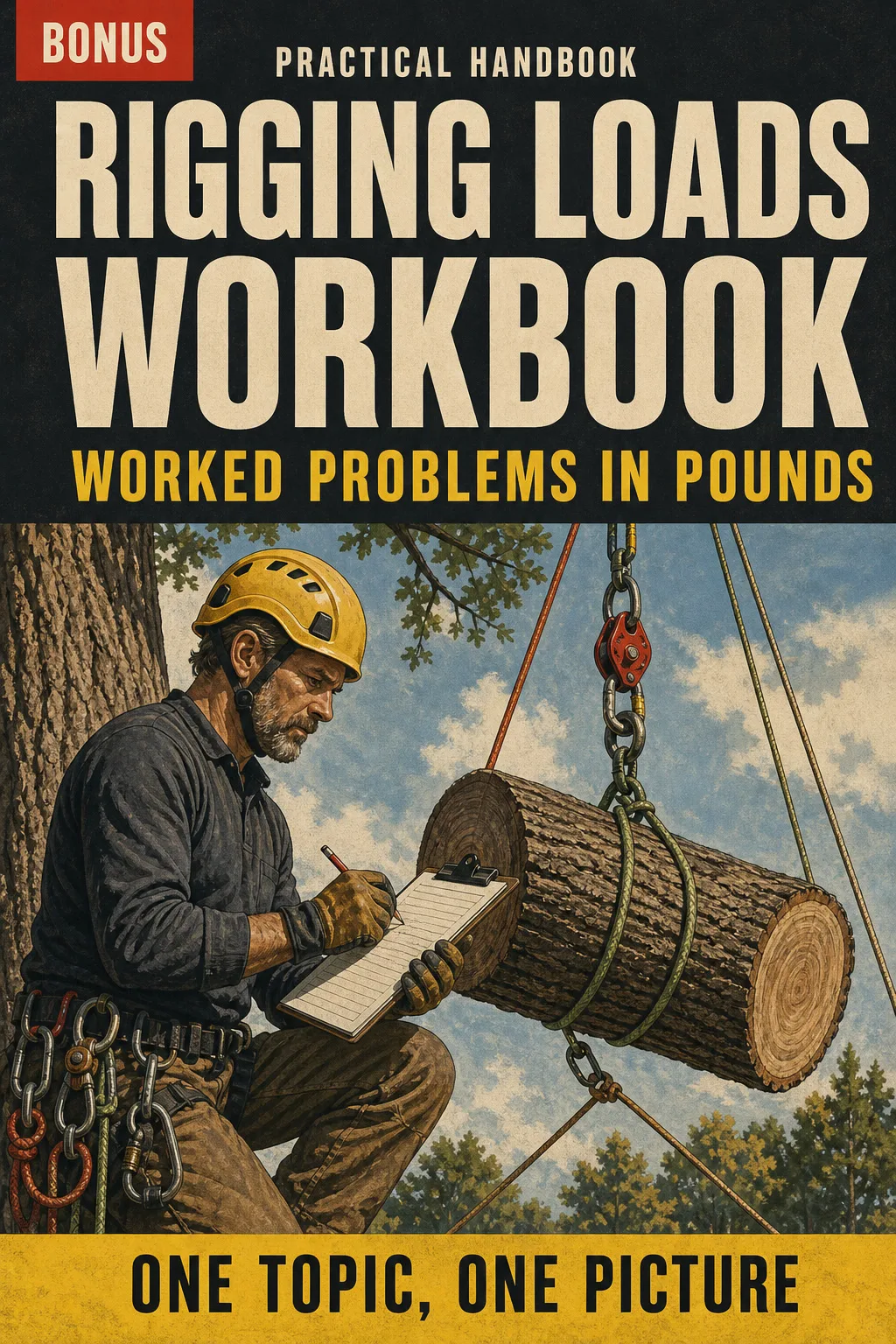
Rigging Loads Workbook: Worked Problems in Pounds

BONUS 1: «Rigging Loads Workbook: Worked Problems in Pounds»

Value on its own: US$ 17.90

Practice the math behind every lowering—piece weight, drop distance, block angle—so you can size the rope and rigging point before the cut, not after.

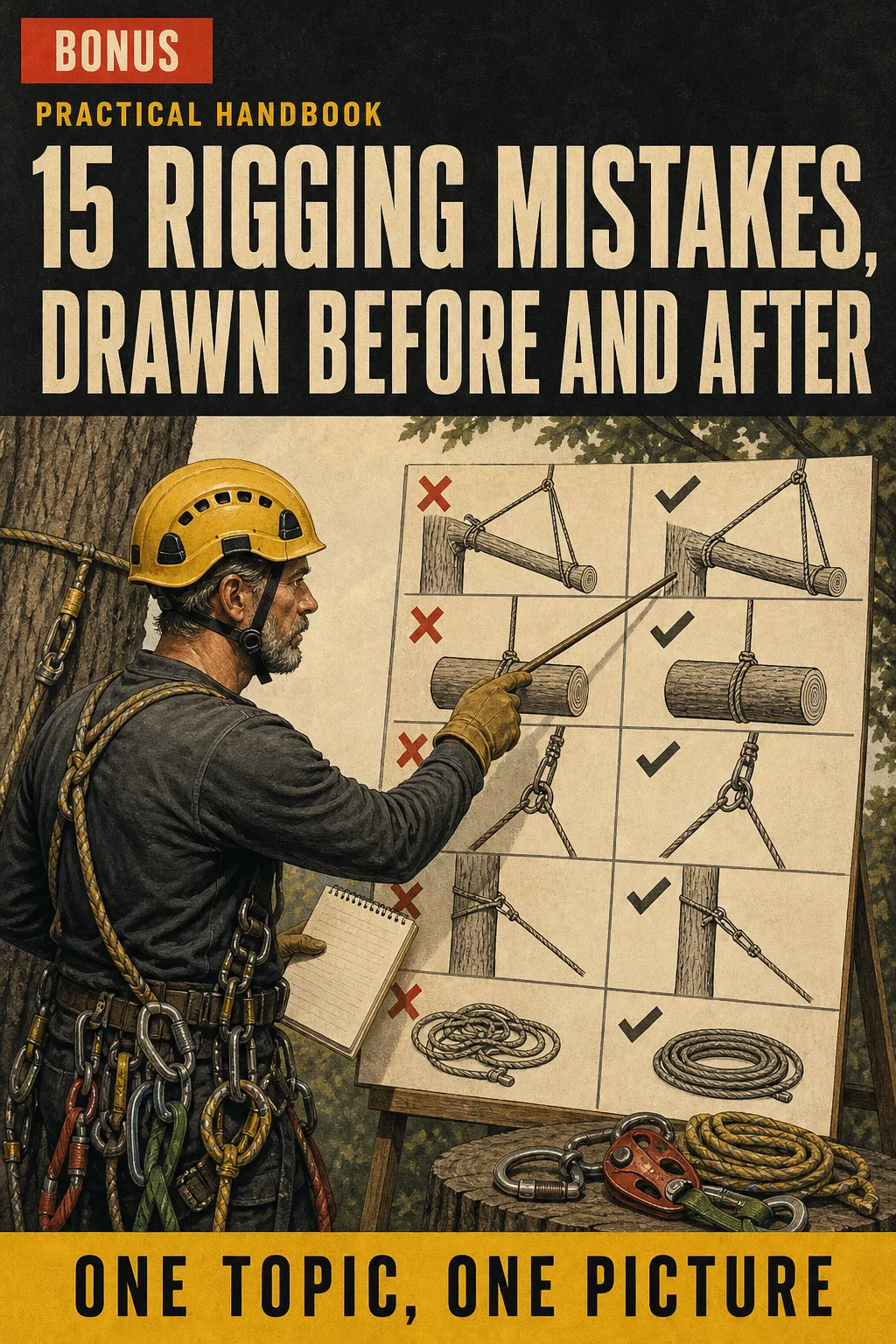
15 Rigging Mistakes, Drawn Before and After

BONUS 2: «15 Rigging Mistakes, Drawn Before and After»

Value on its own: US$ 14.90

See the most common rigging mistakes next to the right way, one drawing each, so you catch them on the job and can show your crew why.

Tree Rigging Illustrated with 2 Free Books

  • Tree Rigging Illustrated: 69 illustrated pagesUS$ 63
  • BONUS 1: Rigging Loads Workbook: Worked Problems in PoundsUS$ 17.90
  • BONUS 2: 15 Rigging Mistakes, Drawn Before and AfterUS$ 14.90
  • High-resolution PDF to printIncluded
Total value US$ 95.80
YOUR PRICE:
US$ 27
You save US$ 68.80
YES, I WANT TREE RIGGING ILLUSTRATED FOR US$ 27

📄 This is a digital PDF book sent to your email: nothing is printed or shipped.

Secure purchaseEncrypted payment30-day guarantee

PDF by email: We email you Tree Rigging Illustrated as a PDF, together with the two free books. It's a single payment: no installments, no extra charges.

Who This Book Is For

You're learning to rig

You're learning to rig

You see why each lowering works before you try it: the forces drawn in pounds, the knots step by step.

You've got a big removal coming up

You've got a big removal coming up

You run the plan the night before, page by page: rigging point, rope, wraps, drop zone and the briefing.

You already run a crew

You already run a crew

You keep the pages in the truck and hand the new groundie the one he needs, instead of explaining it all again on site.

Everything You Get Today

US$ 95.80US$ 27
YES, I WANT TREE RIGGING ILLUSTRATED FOR US$ 27

📄 This is a digital PDF book sent to your email: nothing is printed or shipped.

30DAYS
GUARANTEE

30-Day Guarantee

Try Tree Rigging Illustrated for 30 days, bonus books included.

We refund everything if the file won't open, if the book isn't what you see here, if you were charged twice or if the email doesn't arrive. Just email us.

You pay once. No subscriptions.

Frequently Asked Questions

Is this for me if I've been climbing and rigging for years?

Yes. It doesn't teach you to climb: it draws the forces behind what you already do and puts every lowering in the same five-step plan, so you can check your numbers and show a new groundie the page.

Where does the content come from?

From ANSI Z133 (current edition), the OSHA rules that apply to tree work, including work near power lines, and manufacturer spec sheets. Every example is in pounds and feet, the units used on US job sites. Every rating, design factor and clearance is flagged so you can check it against the current edition and your gear's spec sheet.

Is this official material?

No. It's an independent illustrated book. It isn't published, approved or endorsed by ANSI, OSHA or any industry association.

Does it replace hands-on training?

No. Rigging is learned on the rope, with a qualified person. The book is the reference you keep in the truck to see the why and review before the job.

Do I get a certificate, or is this exam prep?

Neither. It's a reference book, not a course, and it doesn't come with a certificate. The workbook problems are written for this book, to practice piece weight, drop distance and block loads in pounds. They are not questions from any certification exam.

When and how do I get it?

The book and the 2 bonus books come as a PDF by email, to the address you enter at checkout.

Do I have to pay every month?

No. It's a one-time payment, with no subscription.

Can I get it on paper?

Yes: print the PDF at home or at a print shop and keep it in the truck.

How does the refund work?

You have 30 days. We refund everything if the file won't open, if the book isn't what you see on this page, if you were charged twice or if the email doesn't arrive: just email us.

Before You Close This Page

No more guessing what the rope can hold.

You see the load on the block drawn out, and that's it.

You show up to the removal knowing where everything is.

Drawings make studying faster.

The book is right below.

One-time payment: US$ 27 · Guarantee: 30 days · PDF by email

YES, I WANT TREE RIGGING ILLUSTRATED FOR US$ 27

📄 This is a digital PDF book sent to your email: nothing is printed or shipped.